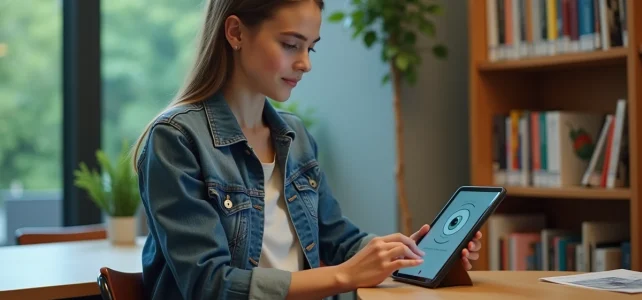
3 %. This figure is enough to reveal the scale of the challenge: in France, only 3 % of public websites truly comply with the digital accessibility obligations set by law. Yet, everywhere, standards are multiplying, decrees are piling up, but for millions of citizens, communication remains a minefield.
As technological advancements, spurred by artificial intelligence and the miniaturization of sensors, accelerate, new tools are redefining access to information and means of exchange. From mobile apps to brain-machine interfaces, recent innovations are shifting the lines and enabling many people to gain autonomy.
Read also : Revolutionizing Communication: An In-Depth Analysis of Innovative Applications
Why communication remains a major challenge for people with disabilities
For thousands of people with disabilities, every interaction with others can become a balancing act. The difficulties are not limited to access ramps or signage: they extend into social interactions, the use of digital media, and even language choice. For those who are deaf or hard of hearing, French sign language (LSF) represents a valuable resource, but one that is often reserved for a minority: too few people master it, and the training opportunities remain limited.
Blind or visually impaired individuals, despite text-to-speech technology or digital braille, still face a glaring lack of adapted content. Navigating the web, filling out a form, reading an official document: each step requires specific tools, and everyone must cope with the limitations of what exists.
See also : Ignite the Dance Floor with the Best Tracks to Dance the Madison
In light of this reality, alternative and augmentative communication (AAC) emerges as a crucial solution. It paves the way for expression and understanding for individuals living with language disorders, whether due to cerebral palsy, aphasia, autism spectrum disorders, or neurological diseases. However, the needs are diverse, sometimes very specific. It is impossible to settle for a standard device: customization and adaptability are essential, capable of adjusting to each life story.
In families affected by multiple disabilities or cerebral palsy, adopting innovative digital tools becomes a necessity: to communicate, learn, work, and maintain connections with their surroundings. AAC concerns everyone: children, adults, seniors; each person moves forward with their own references, priorities, but a shared desire to remain active in their social life. claravox.fr offers, for example, a platform where personalization and accessibility are considered from the design stage to meet these multiple demands.
Many tools can be mobilized to support this inclusion:
- Alternative communication: pictograms, tablets, dedicated software.
- Augmentative communication: voice devices, interactive applications.
- Support: training for caregivers, professional guidance, adapted resources.
Beyond technical solutions, it is the collective ability to ensure everyone has real access to speech, listening, and participation that is at stake. Communication for people with disabilities is not just a matter of tools: it is a democratic issue, a lever for emancipation.
Overview of innovative technologies transforming accessibility and autonomy
Technology today opens up unprecedented perspectives for people with disabilities. Artificial intelligence, widespread connectivity, and miniaturization of components: all of this contributes to reshaping the contours of accessibility and autonomy.
Telepresence robots break down walls: participating in a meeting, attending a class, interacting at an event becomes possible, even from a distance. No longer is there a need to face physical obstacles to be included in collective life. Accessible home automation and connected objects are gaining ground, bringing their share of innovations: voice control to manage the environment, enhanced home security, fall detection through smart sensors or connected watches. These devices, designed to integrate seamlessly, transform daily life and promote independence.
Remotely operated wheelchairs offer newfound freedom, allowing users to choose their route or move around independently, even in complex environments. On the digital side, accessibility applications and screen readers are making significant strides. AI enables real-time transcription, text-to-speech, and content adaptation for each profile: all tools that facilitate access to information, communication, and learning.
In this context, innovative solutions to improve communication for people with disabilities are essential: they combine performance, adaptability, and a constant focus on inclusion. This technological transformation is not just about equipment: it shapes our environment, pushes the boundaries of digital accessibility, and broadens the scope of social participation.
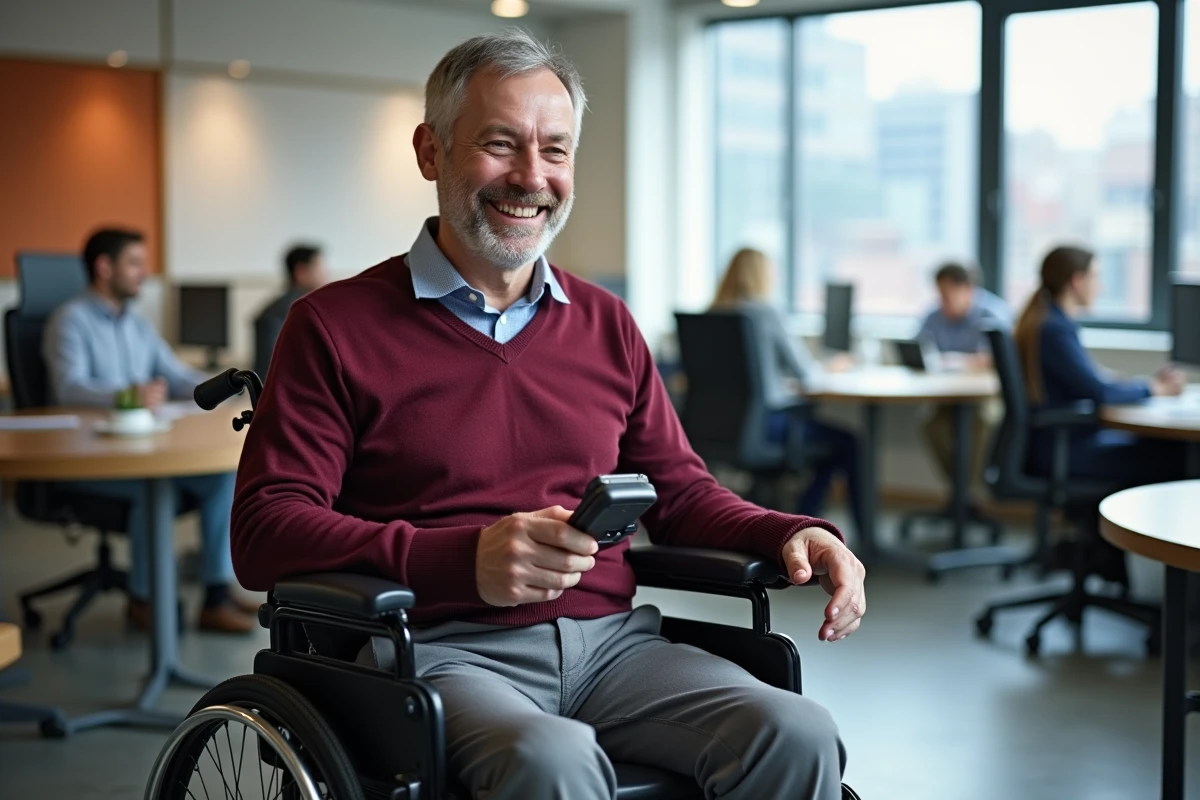
What resources and tools to adopt to facilitate daily life?
For communication to become truly accessible, it is essential to rely on adapted resources, carefully selected. The choice of technical assistance is never made in isolation: it is advisable to turn to information and advice centers on technical aids (Cicat), local support teams (EqLAAT), or national resource centers in alternative and augmentative communication (AAC). Their experience allows for targeting appropriate devices: AAC, home automation solutions, specific digital tools, etc.
Financial considerations also play a role. Procedures with the MDPH or Agefiph open the door to acquiring adapted materials: specialized software, tablets, alternative keyboards, or environmental control systems. These financial aids make it possible to access technologies that would otherwise remain inaccessible for many families.
Skill development in the field comes through training. RSVA Formation, for example, offers dedicated sessions for professionals to better meet the needs for adapted communication. In the workplace, the mobilization of the disability mission involves human resources, information, and management to ensure that every tool, every exchange, is designed to be accessible.
Collective initiatives play a driving role in innovation: hackathons, competitions, events like the Nuit de l’Innovation Solidaire bring together students and professionals around the creation of concrete responses. These meetings stimulate the design of solutions that truly change daily life while affirming the fundamental right to inclusion, as upheld by the International Convention on the Rights of Persons with Disabilities.
When technology meets collective commitment, horizons expand: will you remain a spectator or contribute to this movement? Accessibility tomorrow will depend on everyone’s willingness to push boundaries so that the conversation never stops, for anyone.