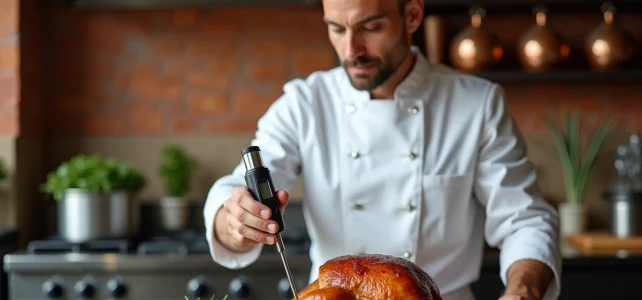
A golden chicken on the outside can remain raw on the inside. The color of the meat, the texture of a fish, or the consistency of a sauce do not guarantee the actual temperature reached at the center of the food. Measuring the temperature of food with a thermometer remains the only reliable method to ensure that cooking destroys pathogenic bacteria, or that a cold product is kept out of the danger zone.
Why measuring the core temperature changes everything for food safety
The bacteria responsible for foodborne illnesses multiply rapidly between 4 °C and 60 °C. This range, often referred to as the thermal danger zone, applies to both a dish cooling on a countertop and food reheated too slowly.
Further reading : How to Choose the Right Bank in 2024: Essential Tips and Comparisons
A visual check is not enough. Ground meat can brown before it has reached a safe internal temperature. Conversely, some poultry retains a pink hue even when perfectly cooked. The food thermometer removes this uncertainty by providing a numerical reading that can be acted upon immediately.
To delve deeper into the various measurement techniques and discover which equipment to choose, a comprehensive guide on the detectable food thermometer on Mi-Figue Mi-Raisin details the options suited for every situation in professional or home kitchens.
See also : How to Choose the Right Food Truck Hood?
Probe thermometer, infrared, bimetal: which tool for which use
You may have noticed that a kitchen thermometer doesn’t always look like the same object? That’s normal: each type meets a specific need.
Instant-read digital probe
This is the most versatile tool. A thin probe is inserted into the heart of the food and displays the temperature on a digital screen within seconds. The digital probe is suitable for cooking, cooling, and reheating. It works well for both a thick roast and a fillet of fish.
Bimetal thermometer (dial)
Less responsive than a digital probe, it takes longer to stabilize. Its probe is often thicker, making it less suitable for thin cuts. It remains common in home kitchens because it does not require batteries.
Infrared thermometer
The infrared only measures surface temperature, not internal temperature. It is used to quickly check the heat of a plate, frying oil, or a storage bin. To validate the core cooking of meat or a gratin, it does not replace a probe.
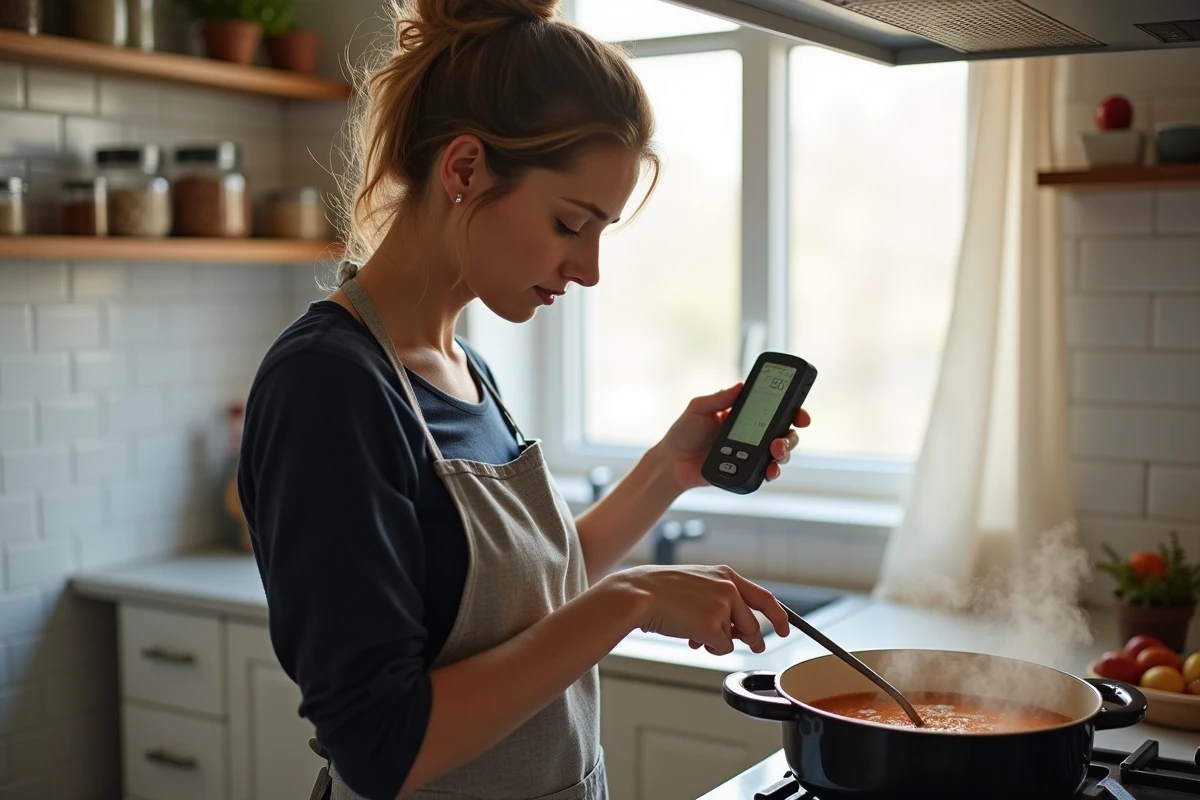
Measuring food temperature: the right probe technique
Having a good thermometer is not enough if the measurement is poorly executed. A few simple rules can prevent common mistakes.
- Insert the probe into the thickest part of the food, avoiding bones, pockets of fat, and the walls of the container, which can skew the reading.
- Push the tip in at least two to three centimeters so that the sensor is well in the center of the piece, where heat penetrates last.
- Wait for the display to stabilize before reading the value. On a fast digital probe, this takes a few seconds; on a bimetal model, expect longer.
- Clean and disinfect the probe between each measurement, especially if you are switching from raw to cooked food. An uncleaned probe can transfer bacteria from one product to another.
For thin foods (escalopes, fish fillets), insert the probe from the side, parallel to the surface, so that the tip remains well in the heart of the meat.
Calibrating your thermometer: the check that everyone forgets
A thermometer that drifts by a few degrees gives a false impression of compliance. Food safety guides recommend regular calibration using the ice water method.
The principle is simple. Fill a glass with ice, add cold water, and stir. Immerse the probe without touching the walls. The display should indicate a value close to 0 °C. If the deviation is significant, consult the manufacturer’s instructions to adjust the calibration or replace the device.
This check takes less than a minute. In collective catering, it is part of good practices related to the HACCP plan. At home, doing it once a month is sufficient to maintain reliable readings.
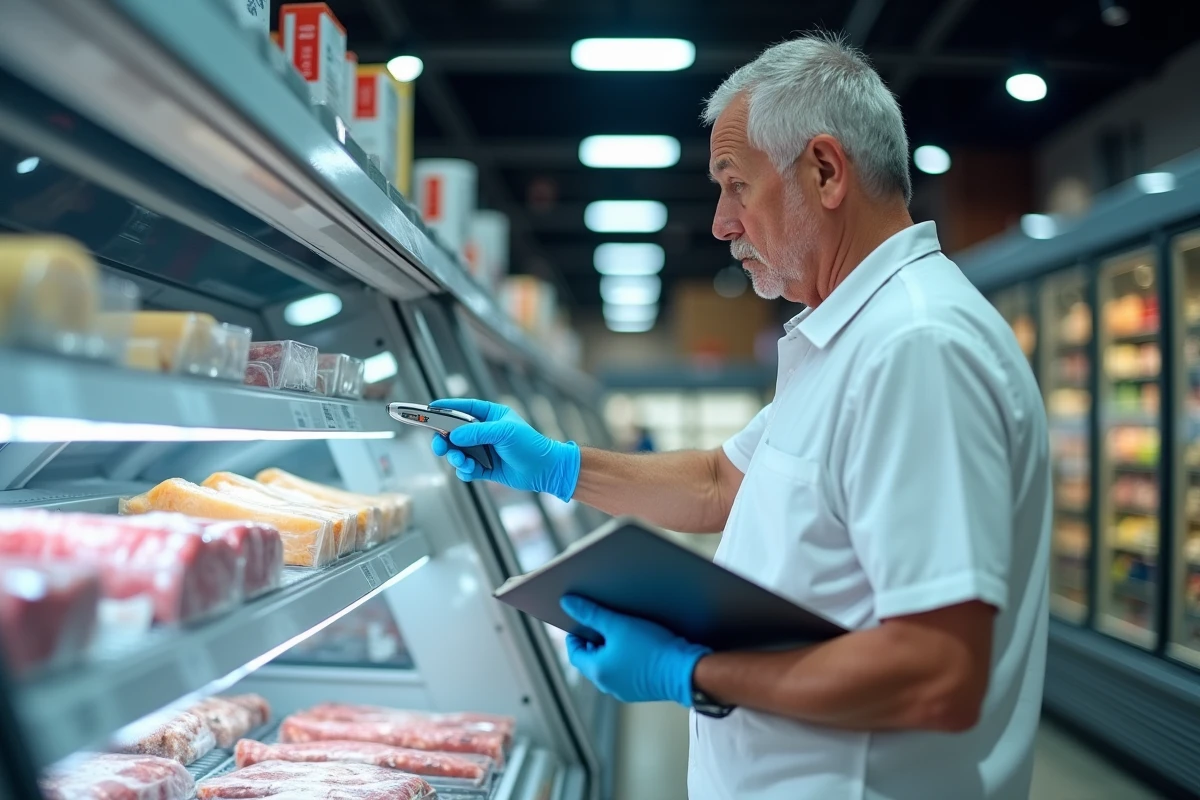
When to measure: the three critical moments for temperature control
Measuring is not limited to the end of cooking. The risks of bacterial proliferation arise at several stages.
- Upon receipt and storage: check that refrigerated goods arrive well below the cold storage threshold. A product delivered at too high a temperature may have already left the safe zone.
- At the end of cooking: the probe confirms that the core of the food has reached the target temperature. This reading protects against incomplete cooking, the leading cause of preventable contamination.
- During hot holding and cooling: a dish prepared in advance must quickly drop below the critical threshold. Measuring the temperature during cooling helps detect food that has stayed too long in the danger zone.
Recording these readings on a tracking sheet, even a simple one, helps identify faulty equipment (a cold room that rises in temperature, an oven that heats unevenly).
The reliability of a measurement depends as much on the action as on the equipment. A well-calibrated thermometer, inserted at the right place and at the right time, transforms a simple kitchen accessory into a true prevention tool. Whether for daily home use or for a restaurant’s HACCP compliance, the habit of taking temperature readings remains the most direct way to ensure the safety of what ends up on the plate.