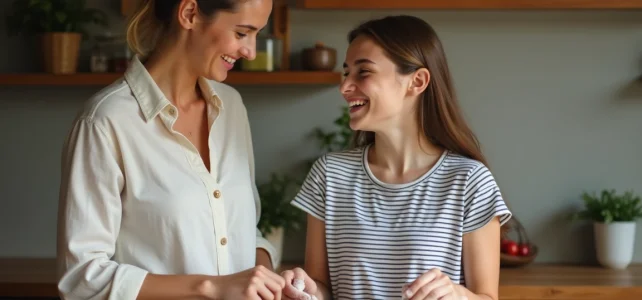
The family routine structures the days, but it often ends up flattening them. Between meals, homework, and commutes, moments of real connection become scarce. Measuring what occupies family time allows us to identify where to inject shared pleasure, and especially in what form.
Physical play and family routine: an underestimated pillar in the face of screens
Most content on family organization focuses on planning (calendars, lists, task distribution). The time dedicated to shared movement, however, remains treated as an optional bonus. This is a hierarchical mistake.
Further reading : How to Choose the Right Bank in 2024: Essential Tips and Comparisons
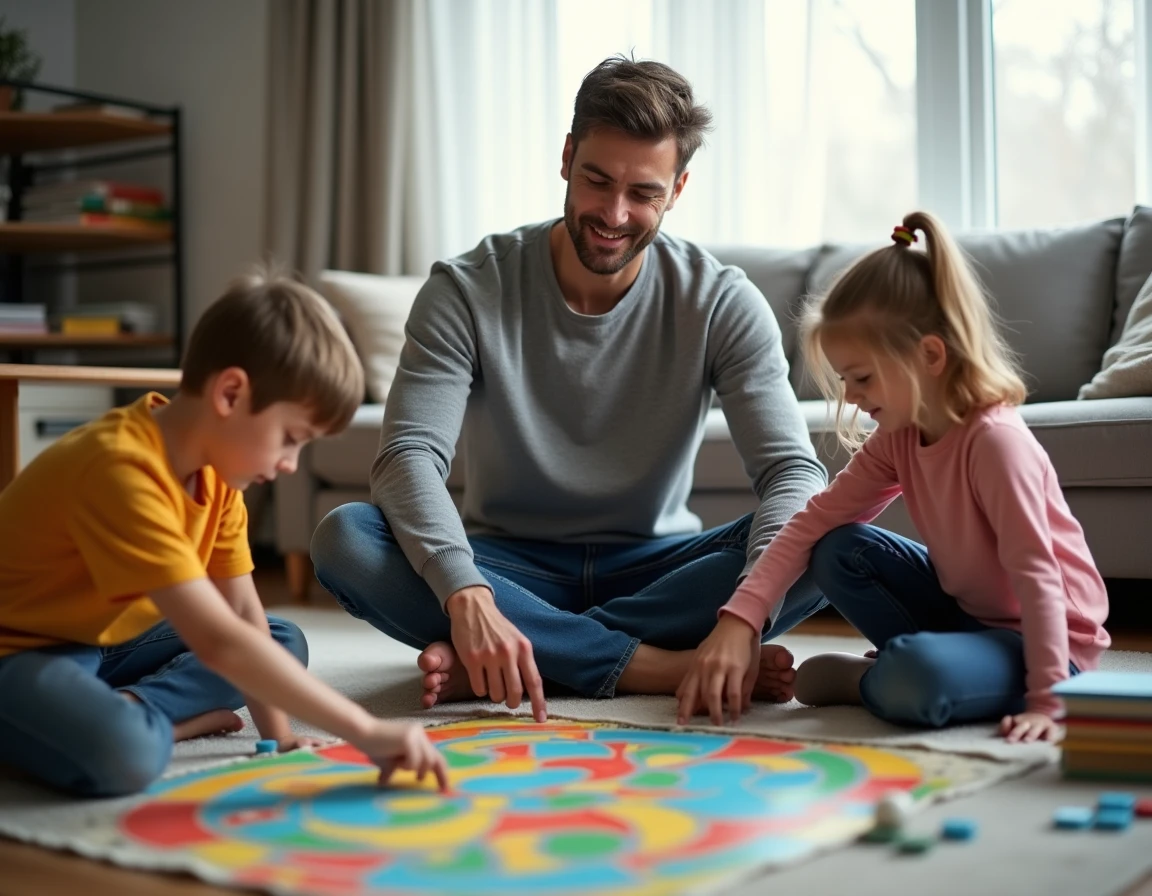
Dancing in the living room after dinner, launching a five-minute physical challenge before homework, improvising a race in the garden: these micro-sequences of physical play have an immediate effect on collective mood. They require no equipment, budget, or logistics.
| Type of family activity | Typical duration | Necessary logistics | Impact on connection |
|---|---|---|---|
| Visit to the amusement park | Half a day to a day | Transport, budget, reservation | Strong but occasional |
| Board game night | 45 min to 1.5 hours | Games available at home | Moderate to strong, regular |
| Daily physical challenge (dance, obstacle course, yoga) | 5 to 15 minutes | None | Strong and cumulative |
| Evening walk | 20 to 40 minutes | None | Moderate, regular |
The table highlights a simple point: short physical activities combine regularity and zero logistics. A ten-minute physical challenge repeated five evenings a week weighs more on family connection than an exceptional outing organized once a month.
Related reading : How to Measure Food Temperature: Reliable Methods and Practical Tips
An in-depth article on family routine on Blog Famille details other levers to break the monotony of daily life.
Micro-rituals of gratitude in the family: what individual notebooks do not capture
Gratitude journals have become widespread as a personal development practice. Transposing this ritual to the family collective changes its scope. Each member mentions one positive thing from their day at dinner: the format is short, the constraint minimal.
What distinguishes the family version from the individual version can be summed up in one word: shared gratitude creates a mirror effect among members. A child who hears their parent name a small pleasure from daily life learns to spot their own. The ritual works both ways.
Conditions for the ritual to last
- Set a specific moment (start of dinner, morning car ride) so that the ritual becomes automatic and non-negotiable in the family agenda
- Limit to one positive thing per person, no more, to avoid the exercise becoming a chore or a competition
- Accept children’s minimalist responses (“recess”) without correcting or prompting, which preserves their desire to participate
The key lies in repetition. A micro-ritual of gratitude abandoned after ten days produces nothing. Planned as a fixed appointment, it gradually changes the tone of family exchanges.
Discreet couple signal: protecting parental connection amidst chaos
The family routine absorbs almost all available energy. The couple often comes last. Couples counselors recommend a simple practice: a discreet signal between partners (password, pressure of the foot under the table) to communicate without children or relatives intervening.
This signal serves two precise functions. The first: to set a boundary when one of them recounts a family anecdote that makes the other uncomfortable in front of the table. The second: to reconnect furtively in the midst of a noisy meal or family gathering, without needing to isolate.
Why this signal changes the couple’s dynamic
Marital resentments related to family life often arise from micro-moments: an intimate story told to make guests laugh, a parenting disagreement exposed in front of grandparents. The discreet signal acts as an invisible safety net. It only takes a gesture to say “stop” or “I’m here” without interrupting the conversation.
This practice does not replace dialogue, but it reduces daily frictions that, accumulated, erode connection.
Planned small pleasures: transforming the mundane into family appointments
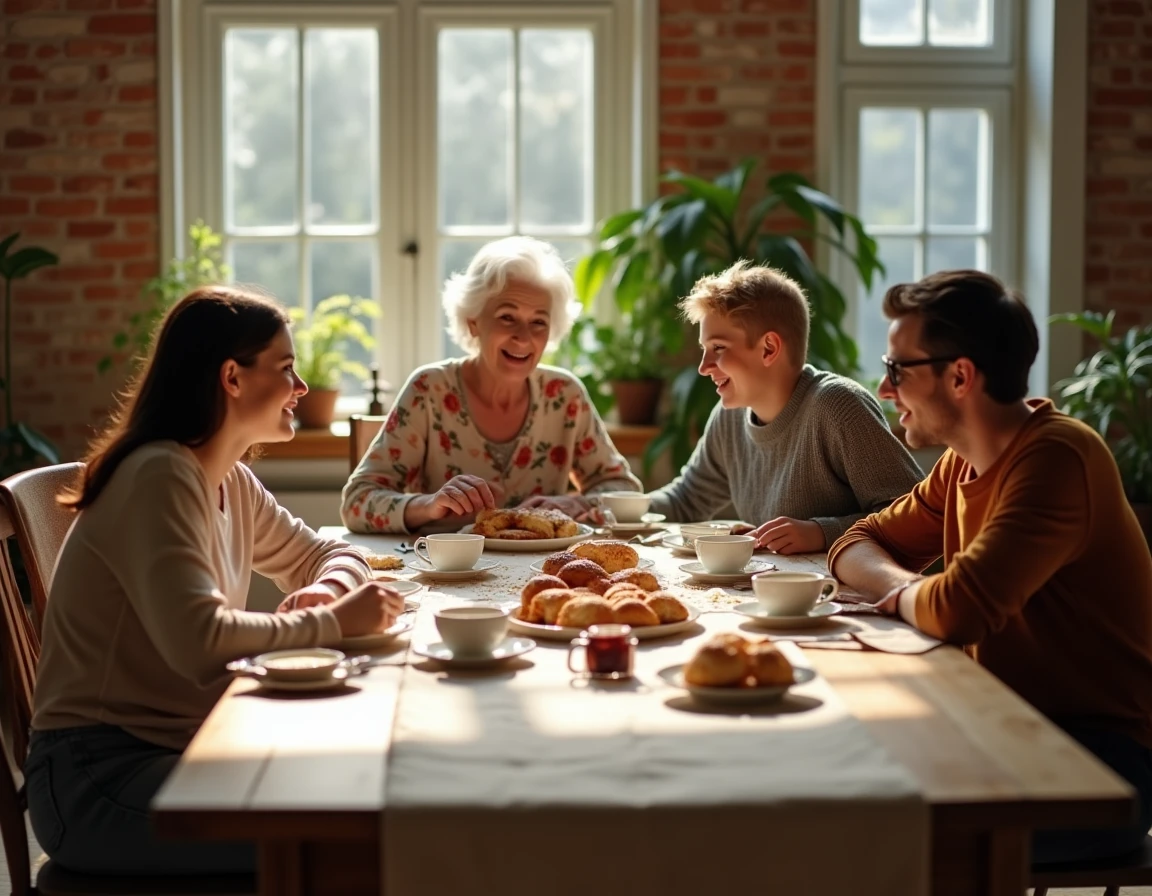
Post-health crisis feedback has highlighted a paradox. Families that report having “rediscovered joy” do not cite vacations or expensive outings. They mention very concrete moments: board game nights, evening walks, extended weekend breakfasts.
The condition for these moments to have a lasting effect: treat them as non-negotiable appointments, scheduled in the agenda just like a medical appointment or a work meeting. Without this formal scheduling, daily life systematically pushes them aside.
- Block a fixed time slot in the family calendar for the walk or game night, even if it’s just thirty minutes
- Involve the children in choosing the activity to strengthen their commitment (a child who chose the board game is more likely to participate)
- Alternate between calm activities (shared reading, drawing) and physical activities (family dance, yoga, improvised obstacle courses) to vary the pleasures
Family pleasure does not happen by chance; it is planned. This idea may seem contradictory, but it is precisely planning that frees up the mental space necessary to enjoy the moment.
The family routine does not need to be dismantled to become a source of joy again. A few targeted adjustments (a daily physical challenge, a word of gratitude at dinner, a signal between partners, a simple pleasure scheduled on the calendar) are enough to change the collective energy. The hardest part is not finding the idea; it’s maintaining it long enough for it to become a reflex.