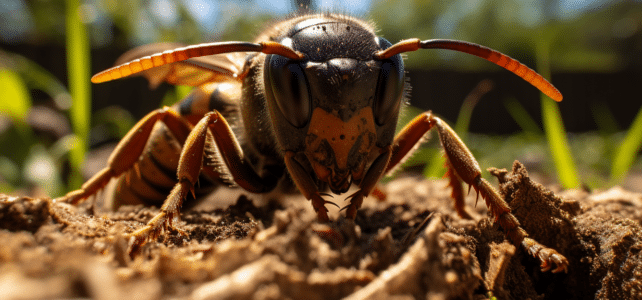
Hornets, often feared for their intimidating appearance and painful sting, follow a complex and fascinating life cycle that begins well before summer, when these flying insects are most commonly observed. This timeline starts with the queen, the only survivor of winter, who seeks a suitable place to build a new nest. Once the location is chosen, she lays the first eggs that will hatch into workers. These workers will take over the construction and expansion of what will become an impressive structure at the peak of the season.
From Hatching to Flight: The Initial Development of the Hornet
At the heart of the hornet’s life cycle lies a critical phase: the initial development that occurs right after the eggs hatch. Hornet larvae, whether from the species Vespa velutina, the invasive Asian hornet, or Vespa crabro, the native European hornet, undergo a metamorphosis that will lead them to adulthood. The time taken to build a hornet’s nest is a period when the queen, the founder of the colony, is most vulnerable, as she must both lay eggs and care for the first larvae. These larvae, diligently fed, will grow to become the workers supporting the future expansion of the colony.
Related reading : How to Navigate the Complexity of the Quebec Postal System?
Asian hornets, as predators, particularly target bees and wasps, thereby impacting local ecosystems. Their European cousins, on the other hand, display less aggressive behavior and feed on a wider variety of insects. These dietary differences influence social behavior and development dynamics within their respective colonies. Once their growth is complete, the larvae metamorphose into adults ready to contribute to the life of the nest, whether as workers or future reproducers.
Hornet venom, often feared for its toxicity comparable to that of bees and wasps, notably contains acetylcholine. While hornet stings can be painful, they are rarely fatal to humans. The increasing presence of the Asian hornet in Europe raises concerns due to its status as an invasive species and its detrimental effects on local bee populations, which are essential for pollination and biodiversity.
You may also like : Simplified Management of Your Finances: How to Optimize the Use of Your Online Account
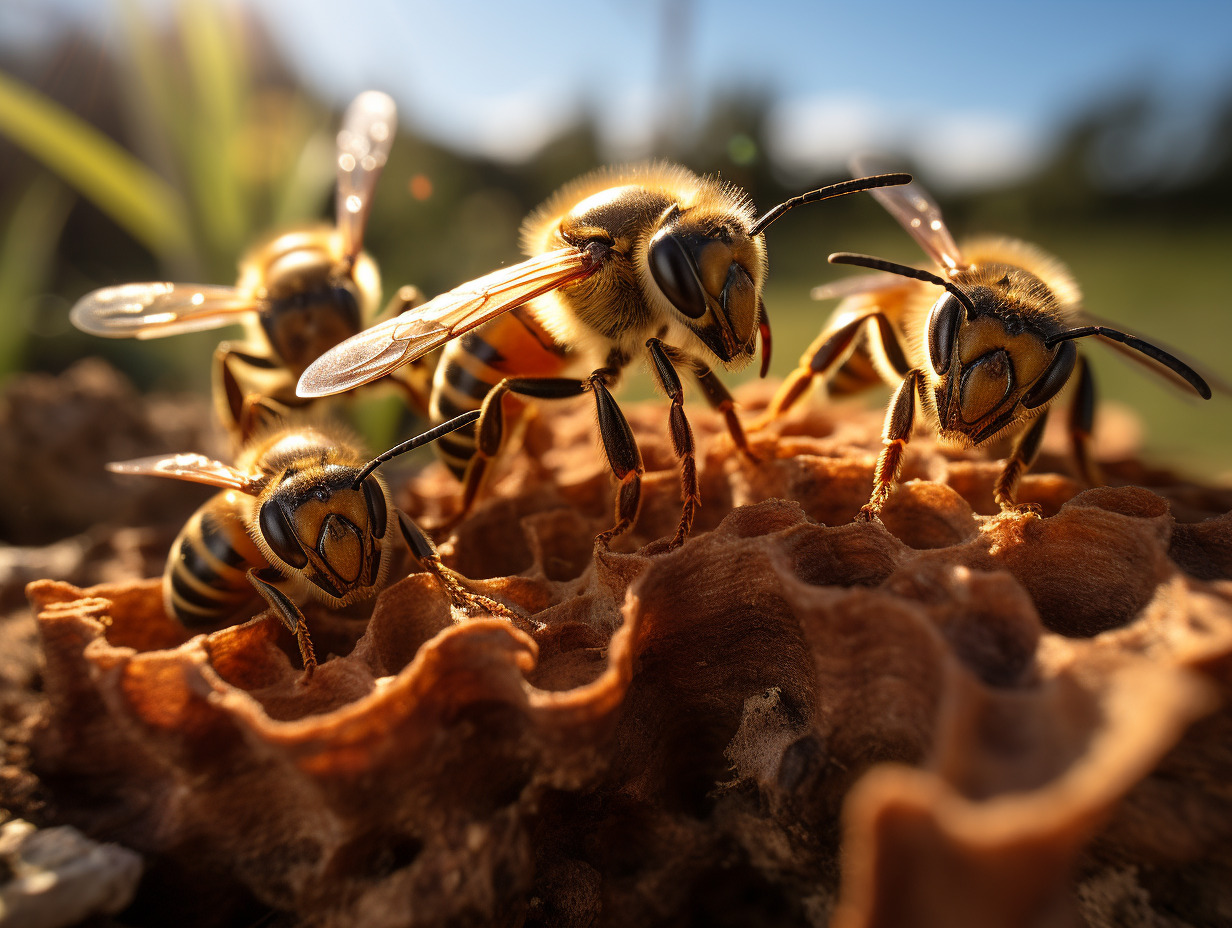
Building and Thriving: The Construction of the Nest and the Social Life of Hornets
The architecture of the hornet’s nest, an astonishing structure built from chewed cellulose fibers, is a monument to the cooperation and ingenuity of social insects. The hornet queen, the founding female, initiates this construction after hibernation, laying her eggs in the cells she has prepared. Her lifespan, limited to about a year, contrasts with the scale of her work: a nest that, under optimal conditions, can reach a meter in height and house up to 1700 individuals.
The workers, whose lifespan is about 30 days, then take over the development of the structure. They are the tireless builders, expanding the nest, feeding the larvae, and protecting the colony. Their hard work ensures the growth and prosperity of the hornet society, a continuous ballet of activities orchestrated by biological imperatives.
At the same time, the male hornets, destined to mate with the queen, play an essential role in the perpetuation of the species. Their ephemeral existence is dedicated to reproduction. The social dynamics of the colony thus rely on a clear division of labor, where each individual, whether a worker, male, or queen, contributes to the survival and expansion of the community.