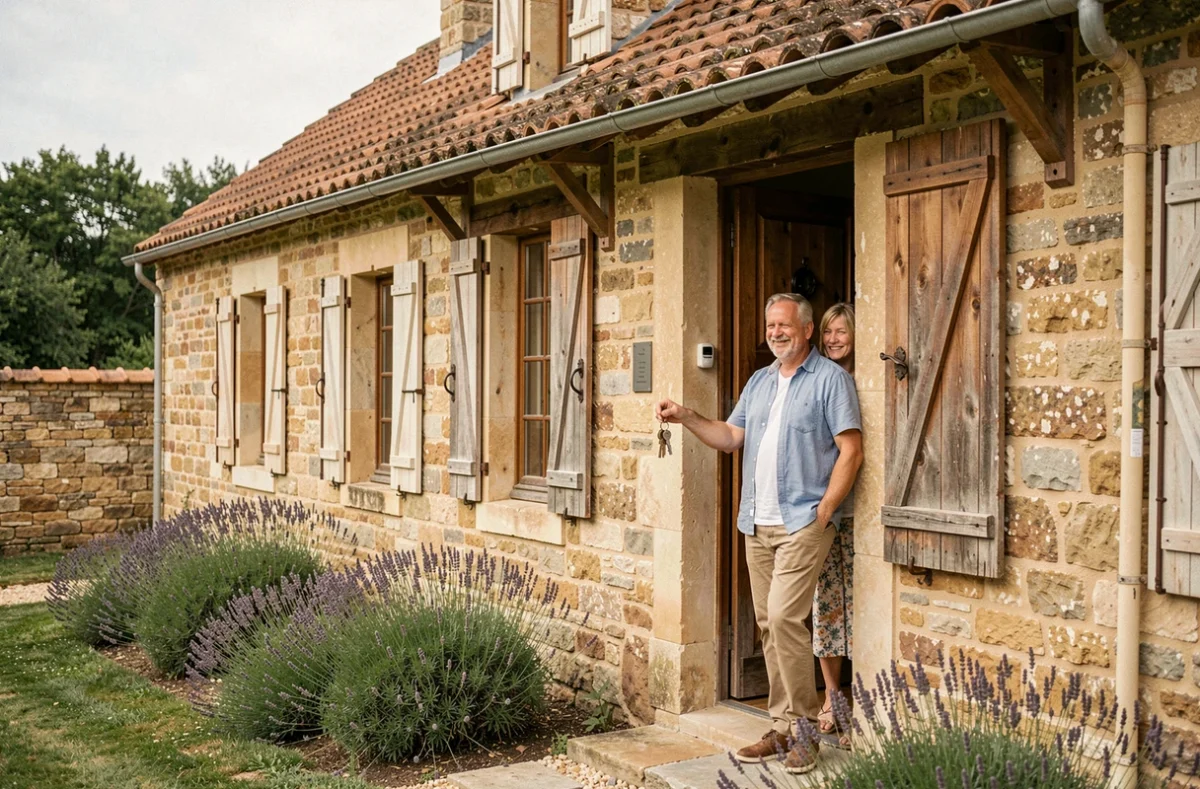
A second home is defined by a simple criterion: any dwelling occupied for less than eight months a year and separate from the owner’s tax residence. This classification, established by the tax authorities, has direct implications for the residence tax, capital gains on resale and the possibility of renting the property out as a holiday let. Before signing, three aspects deserve careful consideration: the property’s legal status, its true cost of ownership and the regulations governing rentals.
Primary or secondary residence: the tax criterion that determines the difference
The distinction is based neither on the size of the property nor on its location. It comes down to a single test: is the property habitually and effectively occupied by the taxpayer, and is it where their professional and material interests are centred?
If so, it is the primary residence. All other properties owned are legally considered second homes, including an apartment used every weekend or a chalet occupied for three months in the summer.
A taxpayer can declare only one primary residence. Misclassifying a property can lead to a tax reassessment involving residence tax, the capital gains tax exemption or even the IFI (French real estate wealth tax). For a closer look at the definition of a second home and its reporting implications, it is worth reading up on the subject before taking any steps towards a purchase.

Residence tax and the annual cost of a second home
The abolition of residence tax on primary residences does not apply to second homes. Owners remain liable for it each year, and municipalities in high-demand areas can apply a surcharge of up to 60% on the base rate.
In addition to this tax, the running costs include several recurring expenses:
- Property tax, payable by all property owners, with the amount varying considerably depending on the municipality and the property’s cadastral value.
- Home insurance, which is often more expensive for a property left unoccupied for part of the year, as some insurers charge extra premiums for extended periods of vacancy.
- Routine maintenance (intermittent heating, gardening, checks after each absence), which professionals estimate at 1–2% of the property’s value per year, and more if it has a swimming pool or is exposed to sea winds.
- Condominium fees, where applicable, which are payable even when the property is unoccupied.
For a house purchased for €200,000, total annual costs (taxes, fees and maintenance, excluding mortgage repayments) often exceed €4,000–€6,000. The property generates no income unless it is rented out, making this expense a particularly important factor in the purchase decision.
Holiday rentals for a second home: what the Le Meur law changes
Renting out a second home as a furnished holiday let may seem like a natural way to offset running costs. However, regulations have tightened since November 2024 under the Le Meur law.
Municipal approval and change of use
Municipalities now have broader powers to regulate tourist rentals. They can require authorisation to change the property’s use, set quotas by neighbourhood or designate areas reserved for primary residences. In some cases, compensation is required (for example, converting commercial premises into housing).
A municipality’s absence from official summaries does not mean that no local rules apply. Checking with the town hall is still the only reliable step to take before listing a property on a platform.
Energy rating and tax: two additional hurdles
In mainland France, a new authorisation to change the use of a furnished tourist rental requires an energy rating of A to E. Properties rated F or G will not be granted this authorisation in municipalities that require it, reducing the rental potential of energy-inefficient homes.
On the tax front, the Le Meur law changed the micro-BIC tax regime applicable to income from furnished tourist rentals received from 2025 onwards. Allowances and thresholds have changed, making the calculation less favourable in some cases. The standard accounting regime may be more advantageous depending on the amount of deductible expenses.
Capital gains tax on resale: no automatic exemption
Selling a primary residence qualifies for a full capital gains tax exemption. The same does not apply to a second home. Capital gains are taxed from the first euro, at a flat rate plus social security contributions.
Ownership-period allowances apply progressively. Full exemption from income tax applies after 22 years of ownership, while social security contributions are fully exempt after 30 years. Selling earlier—for example, after five or ten years—therefore leaves a significant portion of the capital gain taxable.
This mechanism affects the overall profitability of the investment. Factoring in the tax due on sale before buying helps avoid unpleasant surprises when it comes time to sell.
Three practical checks to make before signing
Choosing a second home involves factors that are not always apparent from a viewing alone.
- Check the municipality’s local urban development plan (PLU) to confirm the rules on construction, extensions and changes of use that apply to the property.
- Ask the tax office for the exact amount of the residence tax surcharge and property tax, as online estimates are only approximate.
- Check whether the municipality has introduced a registration or authorisation scheme for furnished tourist rentals, as this will determine whether a rental strategy is viable.
The national online registration service for furnished tourist rentals is scheduled for the fourth quarter of 2026. Until then, procedures remain municipal and vary from place to place. Buying without checking local rules means betting on a regulatory framework you do not understand.