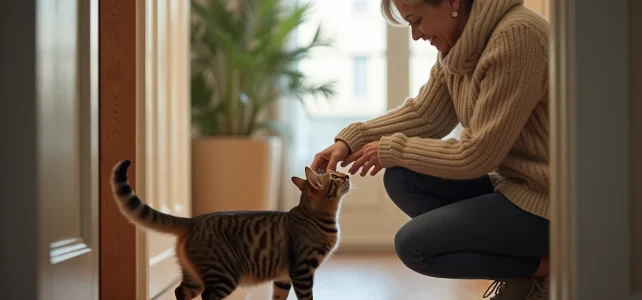
A cat that stops eating, hides under a bed, or marks its new territory with palpable anxiety: this is not an uncommon scenario after a move. The impact of this upheaval is far from trivial for the domestic feline. Veterinarians confirm it: the stress of changing location is among the major causes of urinary or digestive disorders in cats, sometimes lasting for several weeks.
The way to help a cat discover a new home depends on its age, character, and what it has already experienced. Focusing on gradual adjustment and maintaining its habits significantly reduces the risk of running away, persistent anxiety, or undesirable behaviors. There’s no need to rush the meeting between the cat and its new environment: every step counts.
Further reading : The latest trends and must-know news to make your wedding a success
Why moving is a sensitive stage for your cat
Changing homes, for a cat, is like watching its world collapse. Attached to its territory, it does not see this move as a simple interlude, but as a brutal rupture. Forget the idea of a playful transition: the sudden disappearance of familiar smells, known sounds, and daily routes triggers extreme vigilance, a tension that can manifest as scratching, unexpected marking, or a complete refusal to eat. Attempts to escape are also not uncommon. Behind these reactions lies a real anxiety, often minimized by the human surroundings. A stressed cat in an unfamiliar place seeks, above all, to regain its bearings, to ensure that this blank territory is not hostile.
From the professionals’ side, the observation is clear: a cat confined after a move on Maison Créa is never trivial. This withdrawal reflects an urgent need for discreet exploration, observation, and gradual appropriation. Leaving it alone in the face of this upheaval, without appropriate support, exposes it to the lasting establishment of eating disorders, elimination outside the litter box, or even escapes.
Related reading : Sleeping on a Blablacar bus: everything you need to know about comfort and nighttime interiors
Preparing the ground does not start on the day of the move. Everything is played out in advance: choosing a quiet room, reinstalling its favorite objects, anticipating its need for security. A moving professional can, by managing logistics, free up time to focus on the cat’s well-being, observe its reactions, and establish new reassuring rituals. Each phase of this process, from departure to settling in, requires patience and consistency. Predictability, for a feline, is the promise of a return to balance.
What actions to take to soothe your companion before, during, and after transport
The transport crate, often synonymous with stress, can become an asset if approached in advance. Leave it available for several days, lined with a blanket imbued with its scents, adorned with some treats or its favorite toy. The cat will get used to it, sometimes slipping in by itself, which will ease the departure moment.
On moving day, place your cat in an isolated room, with its litter box, bowls, cushion, and a few toys. This bubble allows it to stay away from the hustle and bustle, with doors and windows securely closed. There’s no need to over-stimulate: the environment should be calm, with comings and goings kept to an absolute minimum. During transport, opt for a clean and sturdy crate, covered with a cloth to soften visual and auditory stimuli. This mobile cocoon limits anxiety factors.
Upon arrival, it is essential to recreate landmarks. Settle the cat in a quiet room, surrounding it with everything familiar: litter box, bowls, bedding, cat tree. Your presence, without being overwhelming, will reassure it. Speak softly, offer pets if it shows interest, and maintain the same feeding and play schedule. Diffusers or sprays of calming pheromones can help create a reassuring atmosphere. If the cat refuses to eat for more than 24 hours, or shows signs of persistent anxiety, do not hesitate to seek advice from a veterinarian or a feline behaviorist.
Here are the key steps not to overlook to facilitate the transition:
- Advance preparation of the transport crate, to familiarize the cat with this new space
- Temporary isolation in a peaceful room before departure, away from the turmoil
- Gradual reintroduction into the new home, surrounded by its usual objects
- Maintaining a stable routine, with attentive observation of the cat’s reactions
Taking your cat out with peace of mind: landmarks, tips, and signals to watch for in the new home
After the move, patience remains the best ally. The cat must appropriate its new space before venturing outside. Allow several days, sometimes up to two weeks, for it to find its bearings. Set up the cat tree, scratching posts, and toys in a calm area, away from traffic, so it can explore at its own pace. Multiply hiding spots and create observation points: it will take time to analyze every nook and cranny.
When it seems comfortable, the first outings should be gentle and closely monitored. A well-fitted harness, the door open to the garden or terrace, and your reassuring presence: it’s all about balance. Praise it upon each return home, associating this space with safety. In an apartment or on a higher floor, protect windows and balconies with nets or barriers to prevent any accidents or escape attempts.
Consider identification: an up-to-date microchip, a collar with your contact details, or even a GPS for the more adventurous. An unidentified cat risks never finding its family if it gets lost. Stay alert to certain signals: loss of appetite, unusual meowing, new scratching, or urine marking. These behaviors should raise alarms: they reveal discomfort that should not be overlooked.
To support the cat in this delicate phase, a few points of vigilance are necessary:
- Reassuring presence during the first outings, without ever forcing the pace
- Respecting feeding times and play moments to structure the day
- Protection against external dangers: roads, other animals, unsecured access
- Enrichment of the environment with toys, hiding spots, and interactive feeders
Ultimately, each cat adapts to its new territory in its own way. Give it time, keep an eye on its reactions, and trust will return. When it finally ventures beyond the threshold, it will be because the space has ceased to be a threat. With its regained freedom, it will remind you that no move can withstand feline tenacity for long.