
In 2023, Inditex, the parent company of Zara, generated over 35 billion euros in revenue, while Mango reported 3.1 billion euros. Both Spanish brands, often associated with fast fashion, employ rapid collection renewal strategies, but differ in their production model and pricing positioning. Mango favors a more centralized approach to design and logistics, while Zara relies on extreme responsiveness and an ultra-short logistics circuit. The sourcing methods, communication, and trend processing vary significantly between the two brands, despite a target audience that overlaps across several segments.
Mango and Zara: two worlds, one shared passion for accessible fashion
Mango has grown in Barcelona since 1984, while Zara, a pillar of Inditex, has been redefining fashion since its Galician roots. Both have made affordable fashion a field of expression, but their ways of playing differ. Mango moves forward with a distinctly Mediterranean style: emphasis on cut, consistent visual identity, and a thoughtful progression towards a slightly more sophisticated look. Zara, on the other hand, imposes itself through continuous adaptation, capable of injecting trends into its shelves at lightning speed thanks to cutting-edge logistics.
You may also like : The Latest Trends and Innovations in Home Fitness Coaching
This is already evident from the outset: Mango concentrates design near Barcelona before entrusting manufacturing, particularly to partners in Turkey or Asia. Zara, however, reduces intermediate steps by producing close to its headquarters, gaining speed, even if it means renewing its collection every few weeks. These choices do not leave the in-store experience indifferent: Mango pays attention to every detail, materials, cuts, harmonious ambiance, while Zara focuses primarily on variety and constant novelty, even if it disrupts the routine with each visit.
To strengthen its image, Mango multiplies partnerships with personalities like Penélope Cruz, Antoine Griezmann, or Kate Moss and offers several lines: Mango Man, Kids, Home, Teen. The company is also committed to developing more responsible fibers with the “Committed” program, aiming exclusively for recycled or sustainable materials by 2030. With over 2,700 stores across 110 countries and 14,000 employees, its footprint has clearly expanded.
Further reading : How to Choose the Right Bank in 2024: Essential Tips and Comparisons
Mango’s growth is structured around specific objectives, with a real strategic choice through franchising. Here’s how the brand plans to continue its expansion in the coming years:
- Open 500 new stores by 2026
- Strengthen its presence in France, the United States, and the United Kingdom
This deployment highlights a real difference in tempo and personality between Mango and Zara, even though both seek to make fashion accessible without sacrificing a certain uniqueness. For those who wish to delve deeper into this rivalry, the differences between Mango and Zara are analyzed in detail in this complementary focus.
What really differentiates the customer experience and style at Mango and Zara?
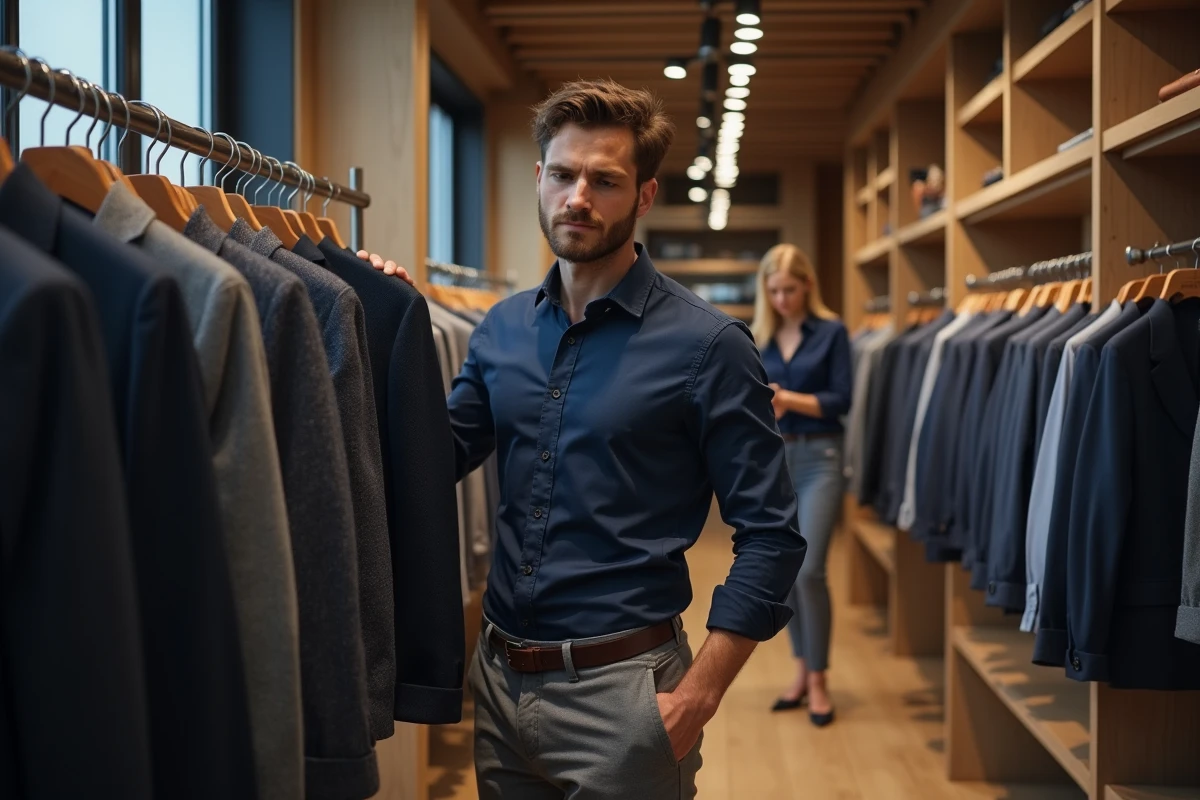
At Mango, everything is designed to create a soft atmosphere inspired by the Mediterranean. The stores favor a clear wardrobe, carefully chosen materials, and a layout that invites customers to take their time. This is worlds apart from the sprinting sensation that can prevail elsewhere: Mango relies on consistency and attention to detail, a Mediterranean heritage obligation.
Mango’s stylistic inspiration evokes chic sobriety, akin to Hermès or Bottega Veneta, for those seeking an upscale experience without getting lost in excessive trends. The multiple collaborations and extensive offerings (Mango Man, Kids, Home, Teen) reinforce this coherence: a fashion that aims to be both elegant, modern, and accessible, without unnecessary flamboyance.
Zara, on the other hand, orchestrates a rhythmic experience: the arrangement of the shelves changes, stocks move quickly, and the eye is constantly drawn to the novelty. People come to Zara to discover, to be surprised, to find the unexpected. The Zara style is plural, equally comfortable in minimalism as in the codes of “fashion addicts.”
In the end, Mango cultivates loyalty and lasting appreciation, while Zara reinvents surprise with each visit. This shapes two distinctly different experiences, undoubtedly complementary for an audience attentive to fashion but eager for varied emotions as soon as they enter the store.
Trends, innovation, and commitment: how are these brands shaping today’s fashion?
The pace is accelerating in the sector. Mango, rooted in its Catalan origins, orchestrates a clever blend of Mediterranean elegance and industrial responsiveness. The design center catalyzes major decisions while remaining alert to global trends. The international network continues to expand: Mango now exceeds 2,700 stores in 110 countries, with revenue surpassing 3 billion euros, confirming its ambitions in France, the United Kingdom, and the United States.
Considering environmental impact has become a necessity integrated into the model. Mango is pushing its “Committed” program: aiming for 100% recycled or responsible fibers by 2030, transparency in the supply chain, and a production pace that reaches nearly 160 million pieces per year thanks to the mobilization of 14,000 employees.
Innovation is embodied in every new collection, in the choice of global ambassadors (Penélope Cruz, Kate Moss, Antoine Griezmann) as well as in the diversification of ranges (Mango Man, Home, Kids, Teen). For Marcel Planellas, an industry expert, Mango stands out today for its ability to combine upscale offerings with responsibility while adapting its model in the face of international competition. The brand asserts itself, embraces its roots, and refuses to be a mere copy, moving step by step to embody the modern Mediterranean attitude.
In the speed and density of trends, two trajectories emerge: Mango bets on coherence and responsibility, while Zara focuses on agility and constant freshness. It remains to be seen, collection after collection, who will manage to establish themselves sustainably in the fashion arena. It’s impossible to decide: for aficionados, the match is reinvented season after season, silhouette after silhouette.